Swimming Lap Counters: Improving Your Pool Performance
Lost track of your laps? Swimming is mentally draining. Use a lap counter (ring or distinct tap system) to track your distance and focus on your stroke.
Azeem Iqbal
Contributor
Swimming Lap Counters: Improving Your Pool Performance
Swimming is one of the most meditative sports. The silence of the water, the rhythmic breathing, the black line on the bottom of the pool. It is also one of the hardest sports for keeping score.
“Was that length 18 or 20? Did I just do a 50 or a 100?”
If you swim for fitness, you know the frustration. The “Swimmer’s Trance”, a combination of sensory isolation and mild oxygen deprivation, makes the brain notoriously bad at math. You finish a hard workout thinking you swam a mile (1650 yards), describing it to strava, only to realize later your math was off by 200 yards.
This is where the Swimming Lap Counter comes in. It is the only way to ensure your data matches your effort.
The Psychology of the “Lost Lap”
Why is counting so hard in the pool?
- Monotony: Every lap looks exactly identical. There are no landmarks.
- Oxygen: When you are working hard, blood flow prioritizes muscles over the sophisticated memory centers of the brain.
- Distraction: You start thinking about dinner, or your stroke technique, and the number slips away.
Offloading this task to a Tap Counter allows you to stay in the “Zone” without anxiety.
Types of Water-Safe Counters
You can’t just take your phone in the lane. You need specialized gear.
1. The Finger Ring Counter
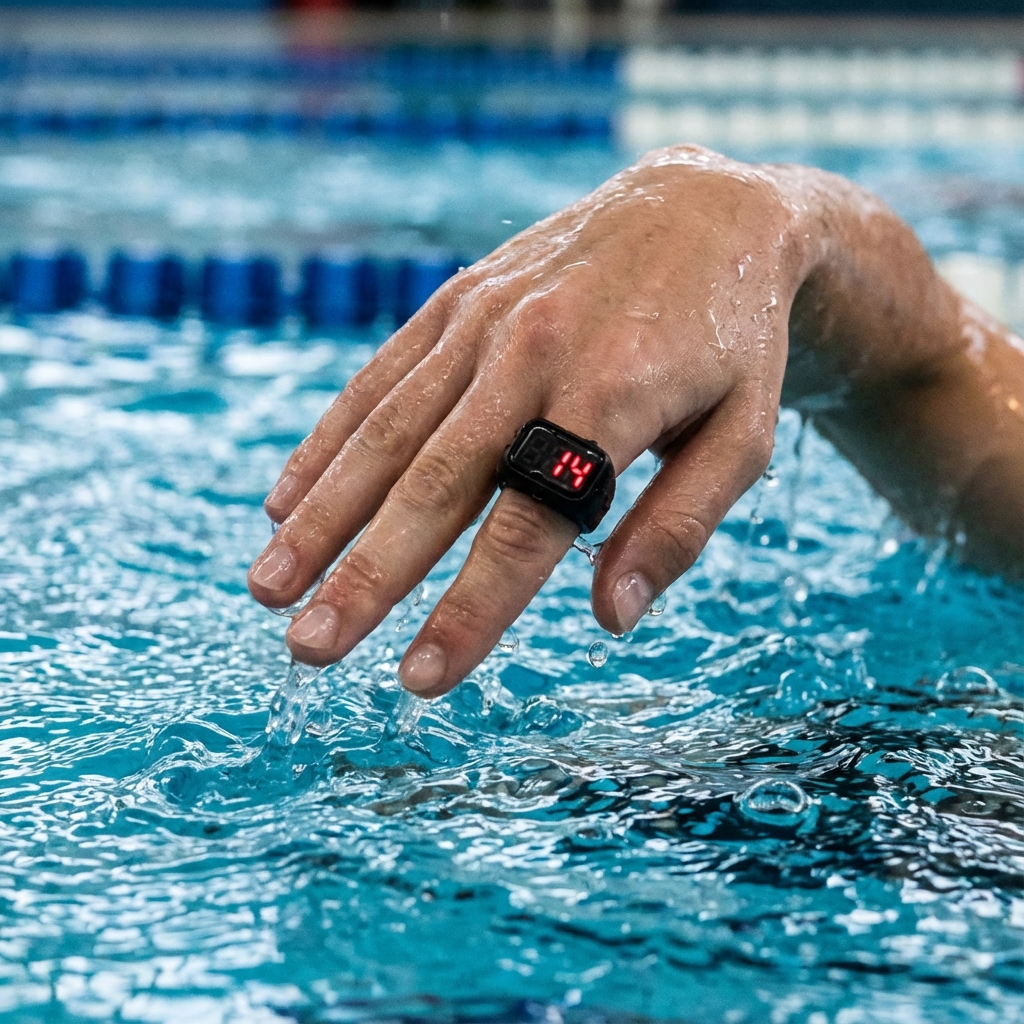
This is the gold standard for serious swimmers. It is a tiny, waterproof digital counter worn on the index finger.
- How it works: You swim your length. As you push off the wall for the turn, you tap the button with your thumb. Click.
- Pros: Requires zero change to your stroke; highly accurate.
- Cons: Small screen can be hard to read through foggy goggles.
2. The Smartwatch (Auto-Tap)
Apple Watch, Garmin, and others use accelerometers to “feel” the push-off.
- Pros: Hands-free. You don’t have to tap anything manually.
- Cons: They are not perfect. If you change strokes mid-lane or stop to adjust goggles, they often register a “ghost lap.” They are expensive.
3. The Poolside Mechanical Clicker
Usually a heavy plastic or metal device sitting on the deck.
- How it works: You stop at the wall, reach up, and hit the big button.
- Pros: huge visual display; no electronics to break.
- Cons: Breaks your flow. You have to physically reach out of the water to hit it.
Drill Training with Counters
Counters aren’t just for total distance; they are for Stroke Rate. Coaches use “Tempo Trainers” (audible metronomes) or tap counters to measure efficiency.
The Golf Score Drill:
- Swim 50 yards. Count your strokes.
- Add your Time (in seconds) + Stroke Count.
- Example: 30 seconds + 40 strokes = Score 70.
- The Goal: Lower the score. Swim faster with fewer strokes. A counter is essential here because trying to count strokes and look at the pace clock simultaneously is mental gymnastics.
The DIY Solution: Beads
If you don’t want to buy a gadget, you can make a “abacus” for your lane.
- Take two water bottles.
- Tie a string between them.
- Thread 10 plastic beads on the string.
- Every 100 yards, slide a bead across. It’s primitive, free, and waterproof.
Conclusion
Data drives improvement. If you don’t track it, you can’t improve it. A swimming lap counter removes the guesswork from your workout. Instead of spending your energy wondering “Am I done?”, you spend that energy on a stronger kick and a better catch.
Whether you go for a high-tech ring or a manual clicker, getting the math out of your head is the fastest way to become a better swimmer.
? Frequently Asked Questions
How do swimmers count laps?
What is a 'tap counter' in swimming?
Why is it so hard to count laps?
Are ring counters waterproof?
Can I use a regular tally counter?

About Azeem Iqbal
We are dedicated to providing accurate, easy-to-understand information. Our goal is to help you minimize effort and maximize results.