The History of the Tally Counter: From 1800s to Today
Who invented the clicker? Trace the surprising history of the tally counter, from counting sheep on farms to tracking radioactivity in labs.
Azeem Iqbal
Contributor
The History of the Tally Counter: From 1800s to Today
To count is human. Since the dawn of time, we have needed to know: “How many?” How many sheep in the flock? How many bushels of wheat? How many enemy soldiers?
For thousands of years, we used fingers, pebbles (the word “calculation” comes from the Latin calculus, meaning pebble), and notched sticks. But as the Industrial Revolution sped up the world, pebbles weren’t fast enough. We needed a machine.
Enter the Mechanical Tally Counter.
The Industrial Revolution: Faster, Higher, Stronger
In the late 1800s, factories needed to track production.
- How many yards of textile did this loom produce?
- How many revolutions did this steam engine turn?
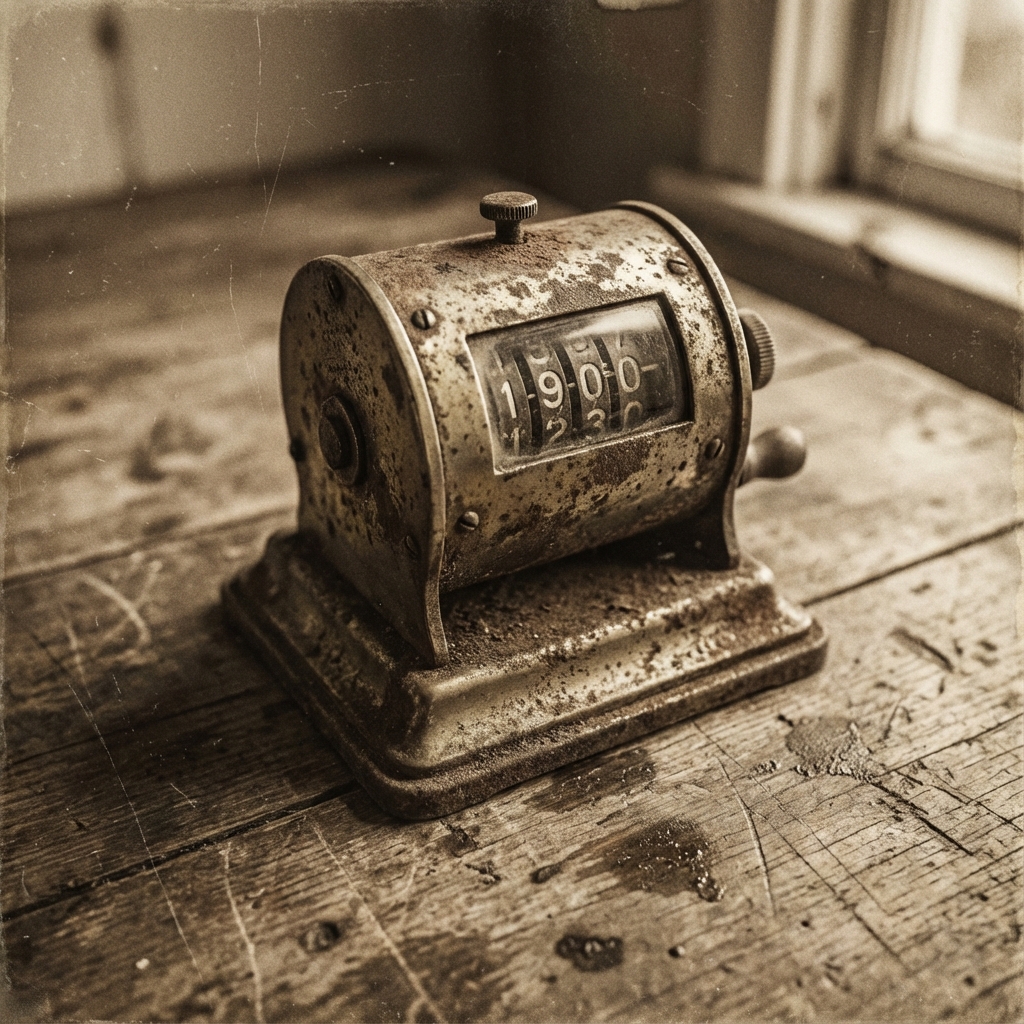
This necessity birthed the odometer and the revolution counter. These weren’t handheld; they were bolted to machines. They used a brilliant mechanism called the Geneva Drive, a gear system that turns continuous rotation into discrete numbers.
The Handheld Clicker: A 20th Century Icon
By the early 1900s, the technology shrunk. A company called Veeder-Root (formed from two counting giants) became the Kleenex of counters. They produced the handheld, thumb-actuated clicker we know today.
The Design:
- Chrome Plated Brass: To resist rust and sweat.
- The Thumb Ring: To prevent dropping it while working.
- The 4-Digit Display: Counting up to 9,999 was deemed sufficient for almost any human task.
Suddenly, “counting” became a portable job.
- Traffic Engineers stood on corners counting Model T Fords.
- Farmers counted cattle at auction.
- WWII: During the war, counters were used to track inventory, troop movements, and even artillery shells.
The Digital Age: LCDs and Silicon
In the 1980s and 90s, the LCD (Liquid Crystal Display) changed everything. Mechanical gears were replaced by circuits.
- Silence: The “Click” was gone (unless you wanted it).
- Size: A counter could now be the size of a ring or a watch.
- Battery: A single watch battery lasted 5 years.
This era saw the rise of the Tasbeeh Ring in the Muslim world and the SportCount ring in the swimming world.
The App Era: The Counter dematerialized
In 2008, the App Store launched. One of the very first apps? A Tap Counter. It was the “Hello World” of apps. Suddenly, nobody needed to buy a $10 device. We all had a $500 supercomputer in our pocket that could count to infinity.
Apps introduced features mechanical engineers could only dream of:
- Timestamps.
- GPS tagging.
- Cloud Sync.
- Voice counting.
Conclusion
The tally counter is a survivor. While we have abandoned the slide rule for the calculator and the typewriter for the laptop, the mechanical clicker persists. Go to a Costco, a nightclub, or a baseball game today. You will still see that chrome circle in someone’s hand. Why? Because sometimes, the simplest tool is the best tool. Here is to the next 100 years of keeping count.
? Frequently Asked Questions
When was the first manual counter invented?
Why is it called a 'Tally'?
How does a mechanical counter work?
What is a Geiger Counter?
Are they still made today?

About Azeem Iqbal
We are dedicated to providing accurate, easy-to-understand information. Our goal is to help you minimize effort and maximize results.